Best Value CRM for Solo Creators and Small Business in 2026
Compare the best value CRM choices for solo creators and small businesses in 2026, including HubSpot, Pipedrive, Salesforce, pricing risk, limits, and upgrade traps.
Buyer De-Risk Kit
Need to choose before the renewal or purchase?
Get one concise USD 19 buyer-side risk check for up to three tools: fit, cost, workflow, switching risk, and the next step.
Decision Brief
What to do with this research
For solo creators and small businesses, HubSpot is the safest first CRM shortlist when the free starting point, contact management, forms, and email logging matter most. Pipedrive is better value for pipeline-only sales discipline. Salesforce is usually only sensible once custom objects, permissions, and an operations owner justify the setup cost.
Head-to-Head Comparisons changes
Get a practical ToolPick alert when pricing, free-plan limits, policy risk, or alternatives change.
Weekly at most · one-click unsubscribe
For solo creators and small businesses, HubSpot is the safest first CRM shortlist when the free starting point, contact management, forms, and email logging matter most. Pipedrive is better value for pipeline-only sales discipline. Salesforce is usually only sensible once custom objects, permissions, and an operations owner justify the setup cost.
- Start with the broken revenue workflow, not the longest feature list.
- Verify current pricing, automation limits, and branding limits before buying.
- Model the CRM beside email, calendar, forms, proposals, and support tools.
Keep reading for the full analysis.
Where this decision goes next
Skip the scroll: the pages most readers open after this one.
Qdrant vs Weaviate vs Pinecone for Hybrid Search in 2026Read the next related article.Best Value CRM for Solo Creators and Small Business in 2026
Disclosure: Some links on this page are affiliate links. If you make a purchase through them, we may earn a small commission at no extra cost to you. AI Disclosure: This content was generated with AI assistance and reviewed against public product information and pricing patterns.
Key Takeaway: In 2026, the best value CRM for solo creators and small businesses is usually HubSpot CRM when you need a low-friction free starting point. Pipedrive is the cleaner choice for sales-pipeline discipline. Salesforce belongs on the shortlist only when the business already needs complex objects, permissions, reporting, and admin ownership.
Every solo creator or small business eventually hits the same problem: a lead arrives from a form, a DM, a referral, a call, or a newsletter reply, then the follow-up lives in a spreadsheet, inbox, or Notion table that nobody checks at the right time.
You may not need an enterprise CRM yet. You need a place to capture leads, remember follow-ups, track proposals, and avoid paying for automation before the workflow is proven.
This guide compares HubSpot, Pipedrive, and Salesforce through the lens of price safety, setup risk, automation limits, and upgrade traps. Always verify current vendor pricing before buying; CRM packaging changes often.
Best Value CRM for Solo Creators: Quick Comparison
| Tool | Pricing posture | Free tier | Learning curve | Best for |
|---|---|---|---|---|
| HubSpot CRM | Check current Starter and hub pricing | Yes | Low | Solo creators, founders, and all-in-one marketing/sales starts |
| Pipedrive | Check current Essential or Advanced pricing | Trial only | Very low | Pipeline-first sales teams and service agencies |
| Salesforce | Check current Starter or Pro Suite pricing | No standard free CRM | High | Teams with complex data models and operations ownership |
For a solo creator, "best value" does not mean the CRM with the most enterprise features. It means the CRM that reduces missed follow-ups, keeps customer context searchable, and does not force a migration before revenue validates the process.
The Business Problem: The Data Silo Tax
Choosing the wrong CRM does not just cost the monthly subscription fee. It creates a data silo tax.
When marketing lives in Mailchimp, sales notes live in a spreadsheet, proposals live in Google Drive, and support conversations live in an inbox, nobody has a complete view of the customer.
- The cost of the problem: A sales rep spends 45 minutes piecing together a client's history before a demo. For a team of 5 reps doing 4 demos a week, that is 15 lost hours, which equals around $1,200/week or $4,800/month in wasted human capital.
- Why it matters in 2026: CRM AI features are only useful when they can see unified customer context. If the CRM cannot connect lead source, email history, proposal status, and support context, AI writing assistants become surface-level text generators.
HubSpot CRM: Best Free Starting Point for Solo Creators
HubSpot is the safest first shortlist for many solo creators because it can cover contacts, forms, email logging, meetings, and basic pipeline tracking before a paid sales stack is justified.
Best-fit Scenario
Solo creator or B2B founder: HubSpot is strongest when the business needs a clean first customer database without an implementation project. The value is not that every advanced feature is free. The value is that the first version of the revenue workflow can be organized quickly, then upgraded only when the limits are visible.
Small marketing-led team: HubSpot becomes more attractive when sales, forms, email, and simple marketing automation need to share the same contact record. It can reduce tool sprawl, but paid hub packaging and automation limits must be checked before a team builds around it.
Expected ROI
| Scenario | Without HubSpot | With HubSpot | Value to model |
|---|---|---|---|
| Solo creator | Manual lead notes across inbox, sheet, and calendar | Contacts, forms, email records, and tasks in one system | Fewer missed follow-ups and less context switching |
| Small sales team | Separate email, forms, scheduling, and pipeline tools | Unified contact record and basic pipeline discipline | Lower integration overhead if HubSpot's limits fit |
Critical Weaknesses
- Scale-up price cliff: HubSpot can become expensive when the business needs Professional-level automation, custom reporting, or advanced marketing features. Check current plan limits before building core workflows around a paid upgrade path.
- Feature sprawl: HubSpot covers marketing, sales, service, CMS, and operations. That breadth is useful, but a solo operator should hide unused areas and keep the CRM focused on the first revenue workflow.
- Branding and automation limits: Free and entry plans may include limits that matter once the CRM becomes customer-facing. Verify those limits on the official plan page.
Pipedrive: Best Value for Pipeline-Only Selling
Pipedrive is strongest when the job is visual deal movement: contacted, qualified, demo scheduled, proposal sent, closed. It strips away much of the marketing-suite complexity that can slow down a solo seller or small agency.
Best-fit Scenario
Outbound sales agency or service business: Pipedrive fits when the team already knows its stages and needs consistent follow-up discipline. It is less attractive when newsletters, landing-page forms, customer support, and content-led nurturing need to live in the same system.
Critical Weaknesses
- Marketing automation depth: If you need complex behavior-triggered campaigns, Pipedrive usually needs another tool beside it.
- Reporting ceiling: Standard sales velocity and conversion reports are useful, but custom cross-functional reporting is not the main reason to choose Pipedrive.
- Stack cost: Pipeline simplicity can become less cheap if you also need separate forms, email marketing, scheduling, support, and analytics tools.
Salesforce: Powerful, but Rarely Best Value for Solo Creators
Salesforce is a serious CRM platform for complex sales operations. That strength is also why it is rarely the best value for a solo creator or very small business.
Best-fit Scenario
Operations-owned sales team: Salesforce makes sense when the sales process has custom objects, approval rules, permissions, quoting, territory logic, and reporting requirements that simpler CRMs cannot model cleanly.
Critical Weaknesses
- Implementation tax: Salesforce usually needs admin ownership, configuration discipline, and sometimes consultant support. That overhead can exceed the license cost.
- Adoption risk: A small team can lose momentum if the CRM feels heavier than the sales process.
- Premature complexity: If the current problem is "I forget to follow up," Salesforce is usually too much system for the job.
Final Decision Framework
- Choose HubSpot if you are a solo creator, founder, agency, or local business that wants a price-safe first CRM with sales and marketing paths under one roof.
- Choose Pipedrive if you run an outbound or relationship-led sales workflow where visual deal velocity is the metric that matters.
- Choose Salesforce if you have complex custom data requirements and budget for a dedicated operations administrator.
Frequently Asked Questions
Can I run my business on HubSpot's free tier forever? Possibly, if your needs stay simple. The moment you need more automation, branding control, reporting, or advanced marketing features, you should re-check the current paid plan limits before moving more customer data into the system.
Is Salesforce too much for a 5-person team? Usually yes. Unless the team already needs complex object relationships, permissions, or reporting, Salesforce can create administrative friction before it creates value.
Do I need a CRM if I use Notion? Notion is a flexible database, but it is not a revenue communication hub by default. A CRM is more appropriate when you need contact history, follow-up tasks, deal stages, email context, and pipeline reporting.
What is the best value CRM for solo creators? HubSpot is the safest first CRM for most solo creators because it can start free and cover the basic contact, form, inbox, and pipeline workflow. Pipedrive can be better value when the creator already sells through a clear deal pipeline and does not need marketing features.
Related CRM and Automation Guides
Official Links
Verify these vendor pages before changing pricing assumptions, implementation scope, or renewal timing:
- Notion pricing
- Notion help center
- Notion official website
- HubSpot official website
- Pipedrive official website
Related ToolPick Decisions
Use these adjacent guides to check pricing, migration, and workflow risk before committing:
- Best CRM for Small Business in 2026 - Continue the same decision path with a related SaaS stack trade-off.
- AI project management tools solo developers - Continue the same decision path with a related SaaS stack trade-off.
- Cloud Cost Optimization Solo Developers - Continue the same decision path with a related SaaS stack trade-off.
Continue the Evaluation
For adjacent buying guides, use the ToolPick blog hub to compare related workflows before committing budget or changing the operating stack.
Search Intent Update
Readers comparing best value CRM for solo creators usually need a tool that can start simple without becoming a migration trap later. The practical shortlist is HubSpot for a price-safe all-in-one starting point, Pipedrive for visual sales pipeline discipline, and Salesforce only when the business already has complex custom objects or a dedicated operations owner.
What To Check First
Start with the first revenue workflow that keeps breaking: lead capture, follow-up reminders, proposal tracking, email sequences, or customer handoff. If the CRM cannot make that workflow measurable within a two-week pilot, its feature list does not matter yet.
How To Use This Page
Use the comparison table to narrow the shortlist, then model the CRM alongside the rest of the revenue stack. If automation and reporting are the deciding factors, continue through the automation topic hub before committing to a paid plan.
FAQ
Is best value CRM for solo creators a buying-intent query?
Yes. It usually means the reader is close to choosing a tool but still needs a price-safe shortlist, not a generic CRM definition.
What should a solo operator do after reading?
Pick one pipeline, import a small lead sample, create three required fields, and test whether the CRM reduces missed follow-ups before moving all customer data.
Frequently Asked Questions
What is the best value CRM for solo creators?
HubSpot is usually the best value first stop for solo creators because it can cover contacts, forms, email logging, and basic pipeline work before a paid sales stack is justified. Pipedrive is stronger when the creator already has a clear sales pipeline and wants fewer marketing features.
What should I verify before choosing a CRM?
Verify current pricing, free-tier limits, automation limits, branding limits, security terms, integration depth, and migration cost on the vendor site before committing.
Is Salesforce worth it for a solo operator?
Usually no. Salesforce can be valuable for complex sales operations, but a solo operator rarely needs the implementation overhead, admin discipline, and customization depth on day one.
Send it to a teammate or save it for the next renewal check.
📬 Get the Weekly SaaS Digest
New tool reviews, pricing-change alerts, and stack cost tips — one email a week, one-click unsubscribe. No spam, no fake urgency.
Turn this article into a decision path
Every ToolPick article should lead to a second useful page: another article, a hub, or a calculator action.
Qdrant vs Weaviate vs Pinecone for Hybrid Search in 2026Read the next related article.Related Articles
 Comparisons
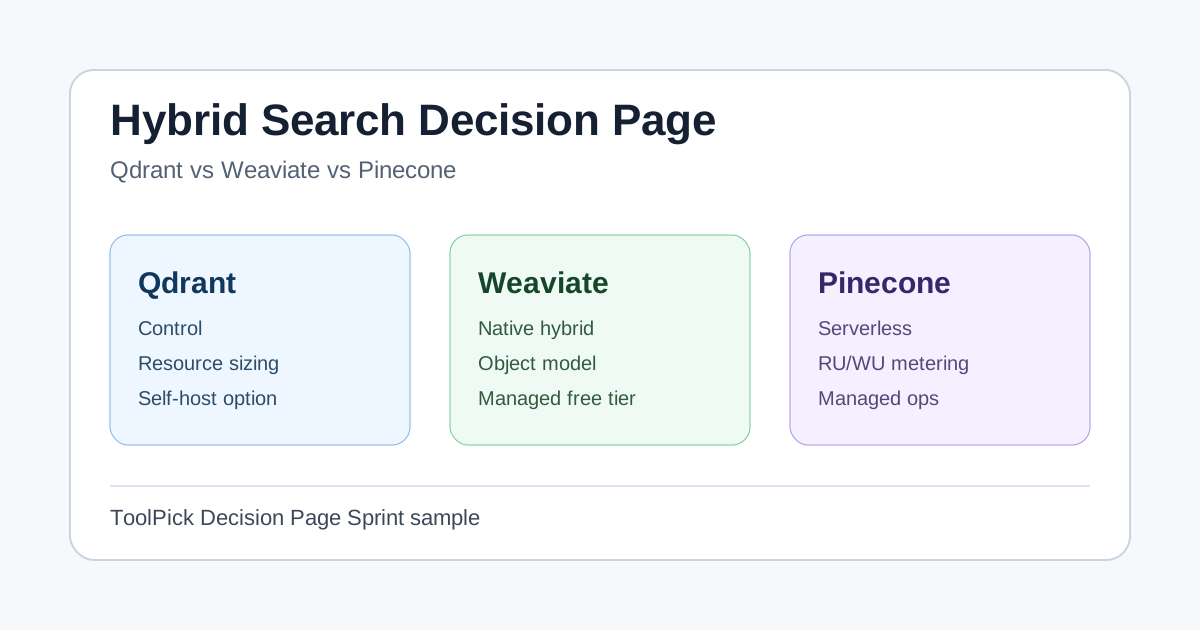
Qdrant vs Weaviate vs Pinecone for Hybrid Search in 2026
A decision page for teams choosing Qdrant, Weaviate, or Pinecone for hybrid search, RAG retrieval, and vector database cost control in 2026.
 Decision Guides
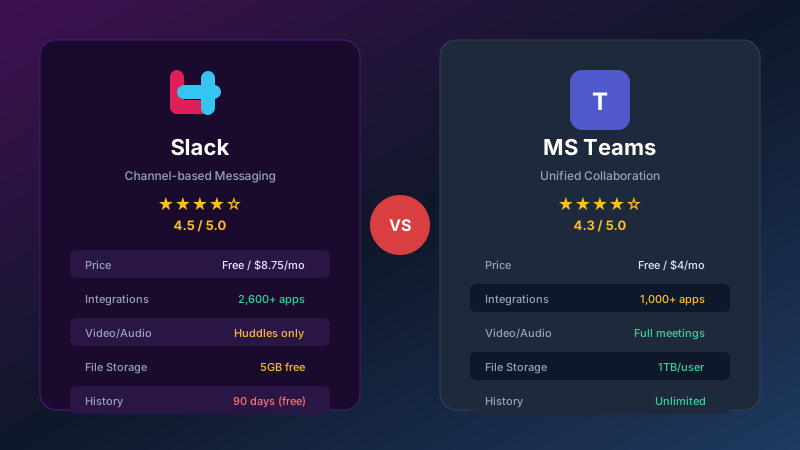
Slack vs Microsoft Teams 2026: Which Chat Tool Fits Your Solo Dev Stack?
Slack vs Microsoft Teams 2026 compared for shortlisted SaaS tools: pricing fit, workflow trade-offs, setup risk, and when to choose each option.
Notion vs ClickUp 2026: Which Project Management Tool Wins?
Notion vs ClickUp 2026 compared for shortlisted SaaS tools: pricing fit, workflow trade-offs, setup risk, and when to choose each option.